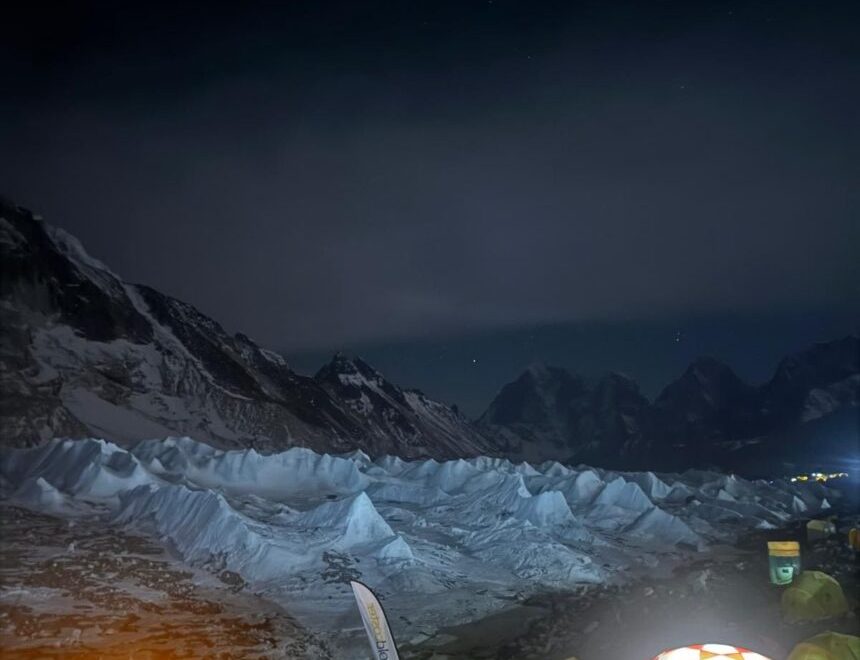
A massive, unstable serac located between Everest Base Camp and Camp One is obstructing the main climbing route, delaying the start of the spring summit season on Mount Everest. The serac, part of the Khumbu Icefall, is known for its shifting glacier, deep crevasses, and overhanging ice, making it one of the most perilous sections of the climb [1][2].
Approximately 410 foreign climbers have been issued permits to attempt the Everest summit during the spring climbing season, which traditionally ends in late May. However, the presence of the serac, approximately 100 feet (30 meters) tall, has prevented the ‘Icefall Doctors’—specialist Sherpa teams responsible for fixing ropes and ladders—from proceeding with their work [1][2][3].
Authorities, including the Sagarmatha Pollution Control Committee, are conducting aerial surveys and are waiting for the serac to melt or collapse naturally to a safe level. The climbing route is typically opened by the third week of April, but this year it remains blocked [1][2].
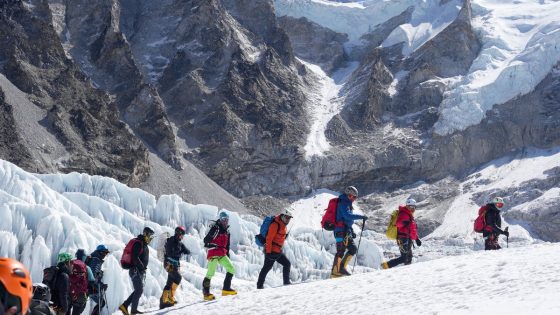
Himal Gautam, an official from Nepal’s Department of Mountaineering, confirmed the serac’s instability and its impact on the climbing route. Lama Kazi Sherpa, chairman of the Sagarmatha Pollution Control Committee, stated that they are monitoring the situation closely [1][2].
There are concerns that once the route reopens, the compressed climbing window may lead to overcrowding on the mountain. Expedition leader Garrett Madison noted that the serac might fall imminently, which could further complicate the situation [3][4].
What Is Known
The serac is part of the Khumbu Icefall, a dangerous section of the Everest climb. It is currently blocking the main route, delaying the start of the climbing season. Authorities are monitoring the serac, hoping it will naturally become stable enough to allow passage [1][2].
What Remains Unclear
It remains uncertain when the serac will become stable enough for the climbing route to open. Additionally, while there are reports of potential alternative measures, such as airlifting rope-fixing teams, these have not been confirmed by multiple sources [4][5].
This article was generated by Bluxle's AI system based on research from multiple news sources. All facts are sourced and cited below. The AI is designed to be neutral and fact-based with no editorial opinion.

Sources & Citations
Weighted by citation frequency — sources cited more often carry greater influence.
Research Basis
This article was researched across outlets representing a range of political perspectives. Only sources whose facts are directly used appear in Sources & Citations above.
Report an Issue
Tell us what you noticed. Our editors will review it.
✓ Report received. Thank you!