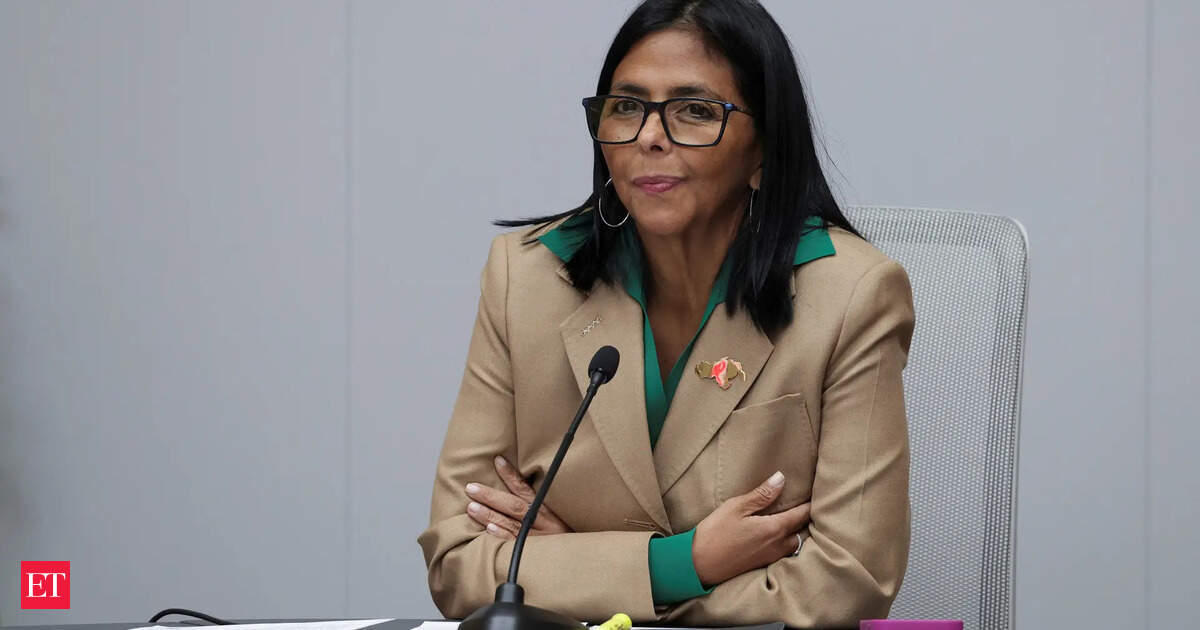
The United States lifted sanctions on Venezuela’s acting President Delcy Rodríguez on April 1, 2026, according to an entry by the Office of Foreign Assets Control (OFAC) on the U.S. Treasury Department’s website [1][2]. This decision allows Rodríguez to engage more freely with U.S. companies and investors, a move that could have significant economic implications for Venezuela [1][2].
Delcy Rodríguez, along with her brother Jorge Rodríguez, was originally sanctioned in September 2018 for allegedly undermining Venezuelan democracy [1][2]. The sanctions removal is part of a broader shift in U.S. policy, which included a March authorization for the state-owned oil company PDVSA to sell Venezuelan oil directly to U.S. companies [1][2].
The U.S. had previously recognized Rodríguez as the “sole head of state” of Venezuela in a federal civil case, despite Nicolás Maduro remaining the legal president of the country [1][2]. Maduro was captured by U.S. forces on January 3, 2026, and Venezuela’s high court declared his absence “temporary,” appointing Rodríguez as acting president for up to 90 days, with a possible extension [1][2].
What Is Known
The lifting of sanctions on Rodríguez is confirmed by both the Associated Press and Reuters, indicating a significant policy shift by the U.S. government [1][2]. This move is seen as a step towards improving economic relations between the two countries, particularly in the energy sector [1][2].
What Remains Unclear
It remains unconfirmed whether the sanctions removal will allow Rodríguez to visit Washington or access blocked assets, as reported by MercoPress [3]. Additionally, reports that U.S. and European energy companies have been issued licenses to resume operations in Venezuela have not been verified by major news organizations [3].
This article was generated by Bluxle's AI system based on research from multiple news sources. All facts are sourced and cited below. The AI is designed to be neutral and fact-based with no editorial opinion.
Sources & Citations
Weighted by citation frequency — sources cited more often carry greater influence.
Research Basis
This article was researched across outlets representing a range of political perspectives. Only sources whose facts are directly used appear in Sources & Citations above.
Report an Issue
Tell us what you noticed. Our editors will review it.
✓ Report received. Thank you!