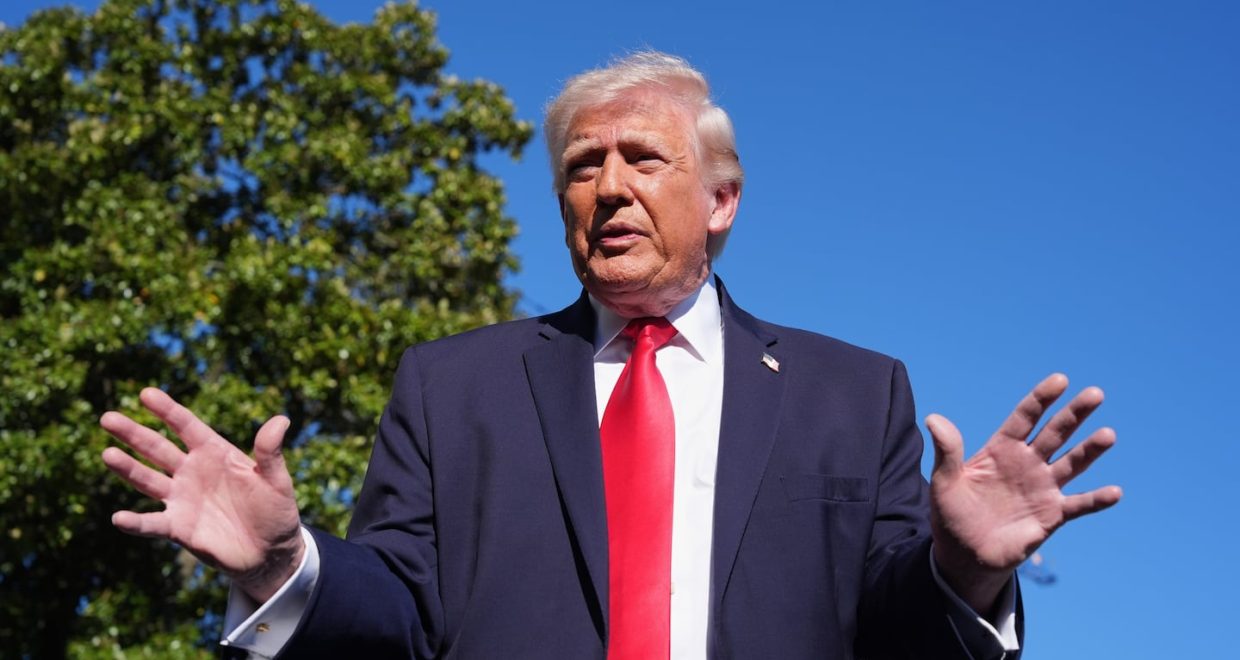
President Donald Trump announced that the U.S. Navy would commence a blockade of the Strait of Hormuz, targeting ships that have paid tolls to Iran. This decision follows the collapse of U.S.–Iran ceasefire talks held in Pakistan [1][2].
Trump stated that the Navy has been directed to “seek and interdict every vessel in International Waters that has paid a toll to Iran,” emphasizing that “no one who pays an illegal toll will have safe passage on the high seas” [1][3]. The blockade will involve other nations, though Trump did not specify which countries would participate [1][4].
The U.S. Navy’s operations will include the destruction of mines laid by Iran in the Strait of Hormuz. Two U.S. Navy guided-missile destroyers recently transited the strait to establish a new route for merchant ships and to begin mine-clearing operations [5][6].
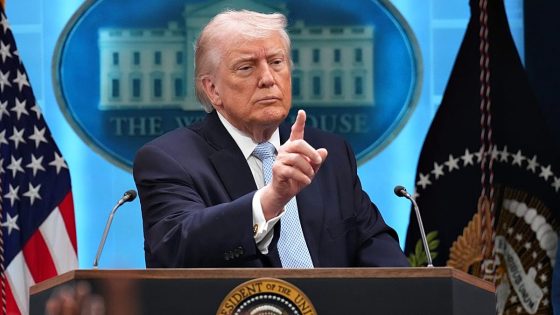
Iran has asserted its right to collect tolls from vessels transiting the strait, a claim that has been rejected by the European Commission. The commission cites international law that guarantees freedom of navigation and opposes any tolls imposed by Iran or the U.S. [1][6][7].
What Is Known
The U.S. Navy is set to enforce a blockade in the Strait of Hormuz, targeting vessels that have paid tolls to Iran. The blockade follows the breakdown of ceasefire talks between the U.S. and Iran. The European Commission has rejected any tolls imposed by either country, citing international law [1][6][7].
What Remains Unclear
It is unclear which other nations will participate in the blockade, as Trump did not specify them. Additionally, the full scope of Iran’s response to the blockade and the potential for escalation in the region remain uncertain [1][4].
This article was generated by Bluxle's AI system based on research from multiple news sources. All facts are sourced and cited below. The AI is designed to be neutral and fact-based with no editorial opinion.
Sources & Citations
Weighted by citation frequency — sources cited more often carry greater influence.
Research Basis
This article was researched across outlets representing a range of political perspectives. Only sources whose facts are directly used appear in Sources & Citations above.
Report an Issue
Tell us what you noticed. Our editors will review it.
✓ Report received. Thank you!