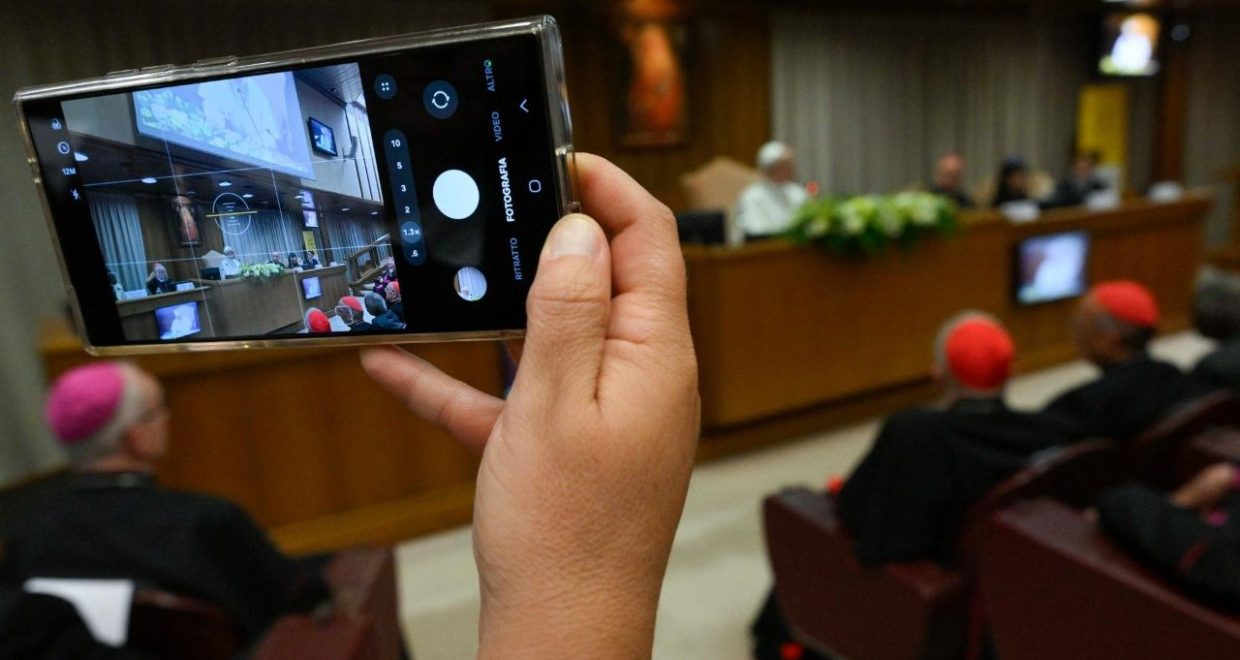
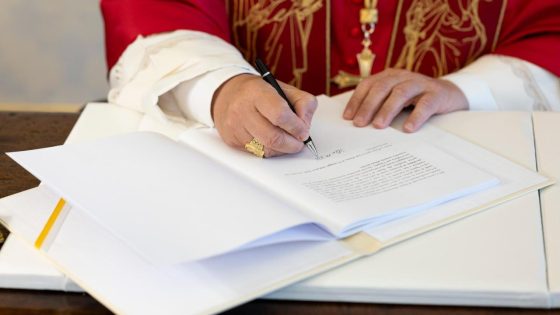
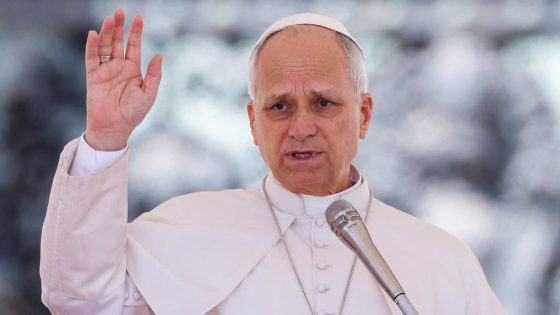
Pope Leo XIV has issued his first encyclical, titled “Magnifica Humanitas” (“Magnificent Humanity”), calling for the “disarming” of artificial intelligence. The document, signed on May 15, 2026, and presented on May 25, 2026, addresses the potential risks posed by AI, including its impact on human relationships, critical thinking, and societal inequality [1][2].
In the encyclical, Pope Leo XIV emphasizes the need to free AI from “logics of domination, exclusion, war, and economic or cognitive competition.” He warns that AI could weaken human connections, concentrate power, and reduce individuals to mere data points [2][3]. The Pope stresses that AI should not be entrusted with irreversible, lethal decisions, particularly in warfare [3].
The encyclical draws parallels between the current technological revolution and the Industrial Revolution, referencing Pope Leo XIII’s 1891 encyclical Rerum Novarum. This historical context underscores the potential societal shifts AI could bring, similar to those experienced during the Industrial Revolution [4].
The document was presented at the Vatican’s Synod Hall, with Cardinal Michael Czerny and Christopher Olah, co-founder of the AI company Anthropic, participating in the event. Pope Leo XIV clarified that disarming AI does not equate to rejecting technology but aims to prevent its domination over humanity [3][5].
What Is Known
Pope Leo XIV’s encyclical “Magnifica Humanitas” calls for the disarmament of AI to prevent its negative impact on society. The document highlights concerns about AI’s potential to weaken human relationships and concentrate power. It also draws historical parallels to the Industrial Revolution [1][2][4].
What Remains Unclear
The specific measures or strategies that the Vatican might propose to achieve the disarmament of AI remain unspecified. Additionally, the encyclical does not provide detailed guidance on how to balance technological advancement with ethical considerations [3][5].
This article was generated by Bluxle's AI system based on research from multiple news sources. All facts are sourced and cited below. The AI is designed to be neutral and fact-based with no editorial opinion.

Sources & Citations
Weighted by citation frequency — sources cited more often carry greater influence.
Research Basis
Outlets in bold were actively consulted during research for this article. Others are in our standard monitoring pool.
Report an Issue
Tell us what you noticed. Our editors will review it.
✓ Report received. Thank you!