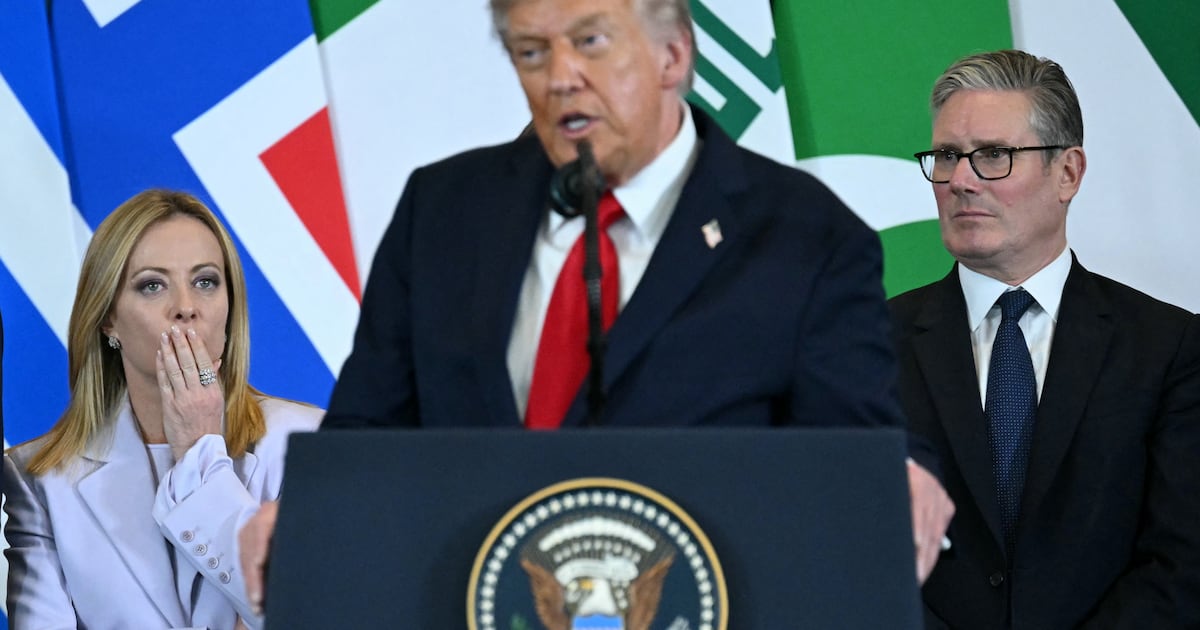
Several NATO allies have taken steps to resist President Donald Trump’s demands for military support in the ongoing conflict with Iran. Spain has closed its airspace to U.S. military aircraft involved in the Iran war, marking a significant move in the alliance’s response to U.S. requests [1][2]. Italy has similarly refused to allow U.S. bombers to land for operations related to the conflict [3][4].
NATO and most European allies have rejected President Trump’s request to help secure the Strait of Hormuz with warships [5][6]. EU foreign policy chief Kaja Kallas stated that Europe does not want to be dragged into the U.S.–Israel war on Iran and broadly rejected the demand to send warships to the strategic waterway [5][6].
British Prime Minister Keir Starmer has also resisted Trump’s demand for Royal Navy warships to secure the Strait of Hormuz, emphasizing that it would not be a NATO mission [7][8]. At a recent G7 meeting in France, diplomats called for an immediate halt to attacks on civilians and urged the reopening of the Strait of Hormuz to international shipping [9].

What Is Known
Spain and Italy have taken concrete actions to limit U.S. military operations related to the Iran war [1][2][3][4]. NATO and European allies have broadly rejected the U.S. request for naval support in the Strait of Hormuz [5][6]. EU foreign policy chief Kaja Kallas and UK Prime Minister Keir Starmer have publicly stated their opposition to involvement in the conflict [5][6][7][8].
What Remains Unclear
It remains unclear how these actions will affect U.S. military strategy in the region and whether further diplomatic negotiations will alter the current stance of NATO allies. Additionally, the full impact on international shipping and regional stability in the Strait of Hormuz is yet to be determined.

This article was generated by Bluxle's AI system based on research from multiple news sources. All facts are sourced and cited below. The AI is designed to be neutral and fact-based with no editorial opinion.
Sources & Citations
Weighted by citation frequency — sources cited more often carry greater influence.
Research Basis
This article was researched across outlets representing a range of political perspectives. Only sources whose facts are directly used appear in Sources & Citations above.