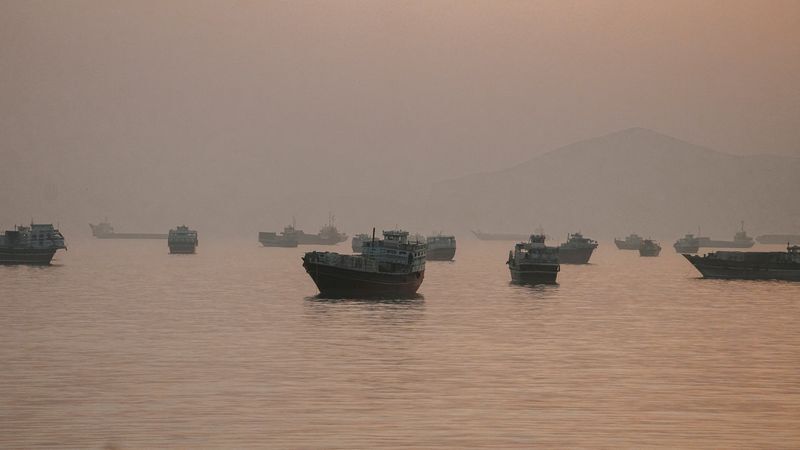
Iran’s Islamic Revolutionary Guard Corps (IRGC) fired missiles at commercial ships transiting the Strait of Hormuz on July 6, 2026, causing damage but no casualties, according to multiple U.S. officials and maritime agencies [1][2]. A tanker traveling south near Oman was struck by an unknown projectile, resulting in a fire but no reported casualties or environmental impact [1][2].
The attacks occurred less than three weeks after Iran and the United States signed a memorandum of understanding (MOU) under which Iran had agreed to halt attacks in the Strait of Hormuz [3][2]. In response, the U.S. military launched strikes against Iranian military targets, hitting over 80 sites, including air-defense systems, coastal surveillance, anti-ship missile sites, drone launch sites, and port facilities [3][4].
Following the attacks, the U.S. revoked a general license authorizing the sale of Iranian oil, citing Iran’s failure to uphold the MOU [3][2]. Iran has asserted that only routes designated by Tehran through the Strait of Hormuz are safe, warning that other routes are “unacceptable and completely dangerous” [4][2].
Iran has intermittently closed the Strait of Hormuz in response to external military actions, including citing Israeli strikes on Lebanon as justification for closure [4][5]. The Strait of Hormuz is a strategic maritime corridor through which approximately 20% of global seaborne oil and liquefied natural gas passed before the conflict [1][2].
What Is Known
The IRGC’s missile attacks on commercial ships in the Strait of Hormuz have been confirmed by multiple sources, including Reuters and the Associated Press [1][2]. The U.S. military’s retaliatory strikes on Iranian targets and the revocation of oil sales licenses have also been corroborated by Axios and the Washington Post [3][4].
What Remains Unclear
Unconfirmed reports suggest that Iran’s attacks may be intended to pressure the U.S. to unfreeze $6 billion in Iranian assets, though this claim has not been verified by major news organizations [6]. Additionally, there are disputed claims regarding whether the Strait of Hormuz was closed at certain points, with Iran asserting closure and the U.S. denying it [5].
This article was generated by Bluxle's AI system based on research from multiple news sources. All facts are sourced and cited below. The AI is designed to be neutral and fact-based with no editorial opinion.

Sources & Citations
Weighted by citation frequency — sources cited more often carry greater influence.
Research Basis
Outlets in bold were actively consulted during research for this article. Others are in our standard monitoring pool.
Report an Issue
Tell us what you noticed. Our editors will review it.
✓ Report received. Thank you!