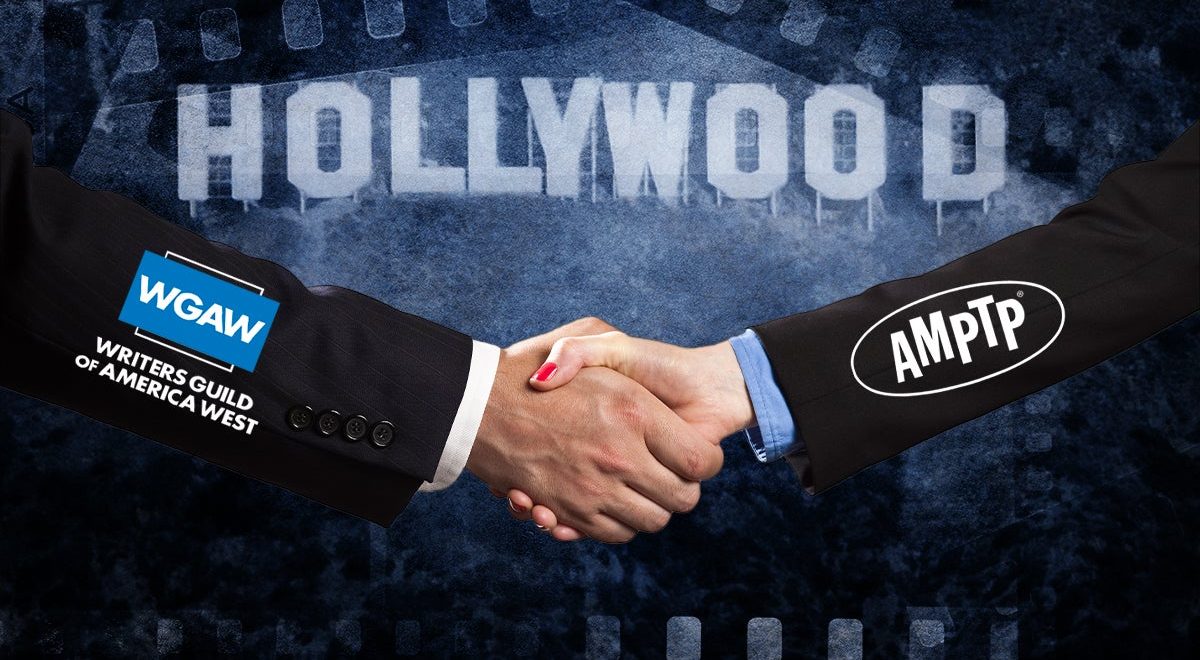
The Writers Guild of America West (WGAW) and the Alliance of Motion Picture and Television Producers (AMPTP) have reached a tentative four-year agreement following approximately three weeks of negotiations. The WGAW negotiating committee unanimously approved the deal, which now awaits approval from the WGAW board and ratification by its members before becoming binding [1][2].
The AMPTP confirmed the agreement in a statement on its website, expressing optimism about building on this progress toward long-term industry stability. The agreement extends the typical contract term by one year, making it a four-year deal [1][2].
While the specific terms of the agreement have not been publicly disclosed, it is expected to address key priorities for writers. These include improved health care plans, protections against artificial intelligence, and enhancements to gains made in 2023. The deal is also anticipated to feature increased company contributions to health plans, pension increases, higher compensation for streaming work, and protections around AI licensing [2][3].
The timing of the agreement is significant, as it comes just weeks before the current contract’s expiration in May 2026. This development occurs amid an ongoing strike by the WGAW’s own staff union, which began in February 2026 [1][2].
What Is Known
The WGAW negotiating committee has unanimously approved the tentative agreement, which now requires further approval and ratification. The AMPTP has confirmed the deal, which extends the contract term to four years. Expected provisions include improved health care, pension increases, streaming compensation, and AI protections [1][2][3].
What Remains Unclear
Specific numerical details regarding the improvements in health care, streaming residuals, pension increases, or AI licensing terms have not been confirmed by multiple independent sources [1][2].
This article was generated by Bluxle's AI system based on research from multiple news sources. All facts are sourced and cited below. The AI is designed to be neutral and fact-based with no editorial opinion.
Sources & Citations
Weighted by citation frequency — sources cited more often carry greater influence.
Research Basis
Outlets in bold were actively consulted during research for this article. Others are in our standard monitoring pool.
Report an Issue
Tell us what you noticed. Our editors will review it.
✓ Report received. Thank you!