Inflation rates have varied significantly across the terms of the last six U.S. presidents, according to data from multiple sources. This report examines the cumulative inflation rates during the administrations of Joe Biden, Donald Trump, Barack Obama, George W. Bush, and Bill Clinton.
During Joe Biden’s presidency from 2021 to 2025, the cumulative inflation rate was approximately 21.2% [1][2]. This period was marked by economic challenges, including the recovery from the COVID-19 pandemic.
Donald Trump’s first term, spanning from 2017 to 2021, saw a cumulative inflation rate of about 7.7% [3][2]. Economic policies during this period included tax reforms and trade negotiations.
Barack Obama’s second term, from 2013 to 2017, experienced a cumulative inflation rate of approximately 5.2% [3][2]. This period followed the financial crisis recovery efforts initiated in his first term.
George W. Bush’s second term, from 2005 to 2009, recorded a cumulative inflation rate of about 10.5% [3][2]. This era included the onset of the global financial crisis.
Bill Clinton’s second term, from 1997 to 2001, had a cumulative inflation rate of approximately 9.7% [3][2]. The late 1990s were characterized by economic expansion and technological advancements.
What Is Known
The cumulative inflation rates for these presidents are based on data from multiple independent sources, providing a clear picture of the economic conditions during their respective terms [1][2][3].
What Remains Unclear
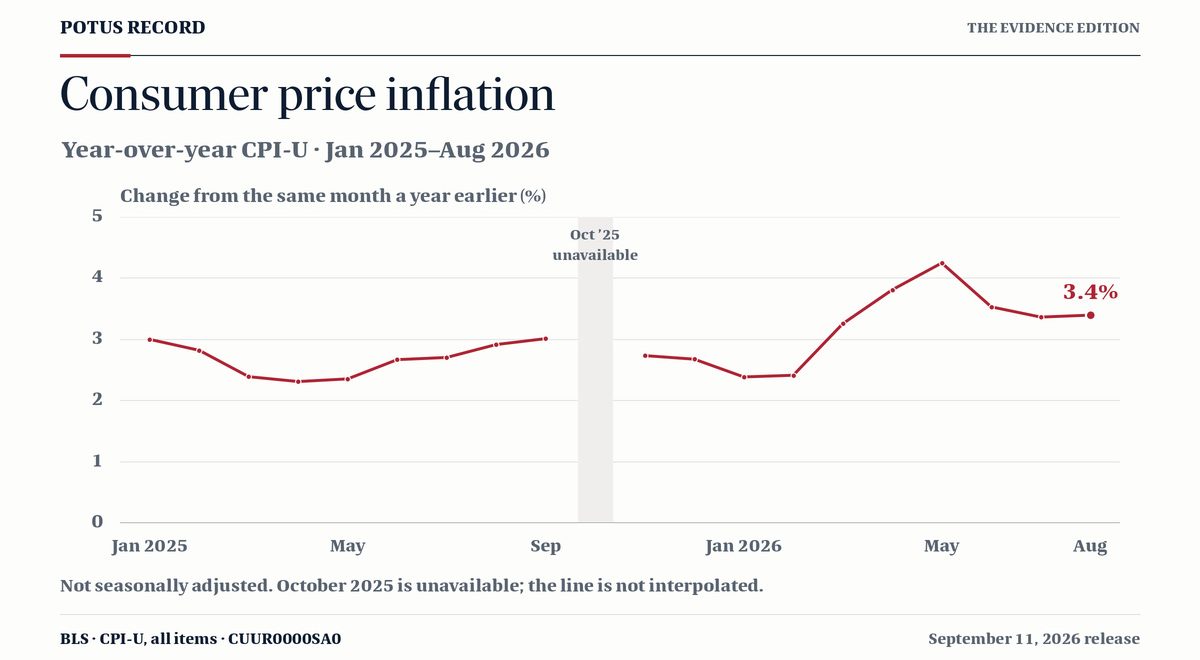
The inflation rate for Donald Trump’s second term, from 2025 to 2026, remains unconfirmed due to incomplete data. A partial figure of 4.71% has been reported by a single source, but further verification is needed [1].
This article was generated by Bluxle's AI system based on research from multiple news sources. All facts are sourced and cited below. The AI is designed to be neutral and fact-based with no editorial opinion.

Sources & Citations
Weighted by citation frequency — sources cited more often carry greater influence.
Research Basis
This article was researched across outlets representing a range of political perspectives. Only sources whose facts are directly used appear in Sources & Citations above.
Report an Issue
Tell us what you noticed. Our editors will review it.
✓ Report received. Thank you!